Start plotting your next move
Guest post: How chess builds real-world character skills in kids

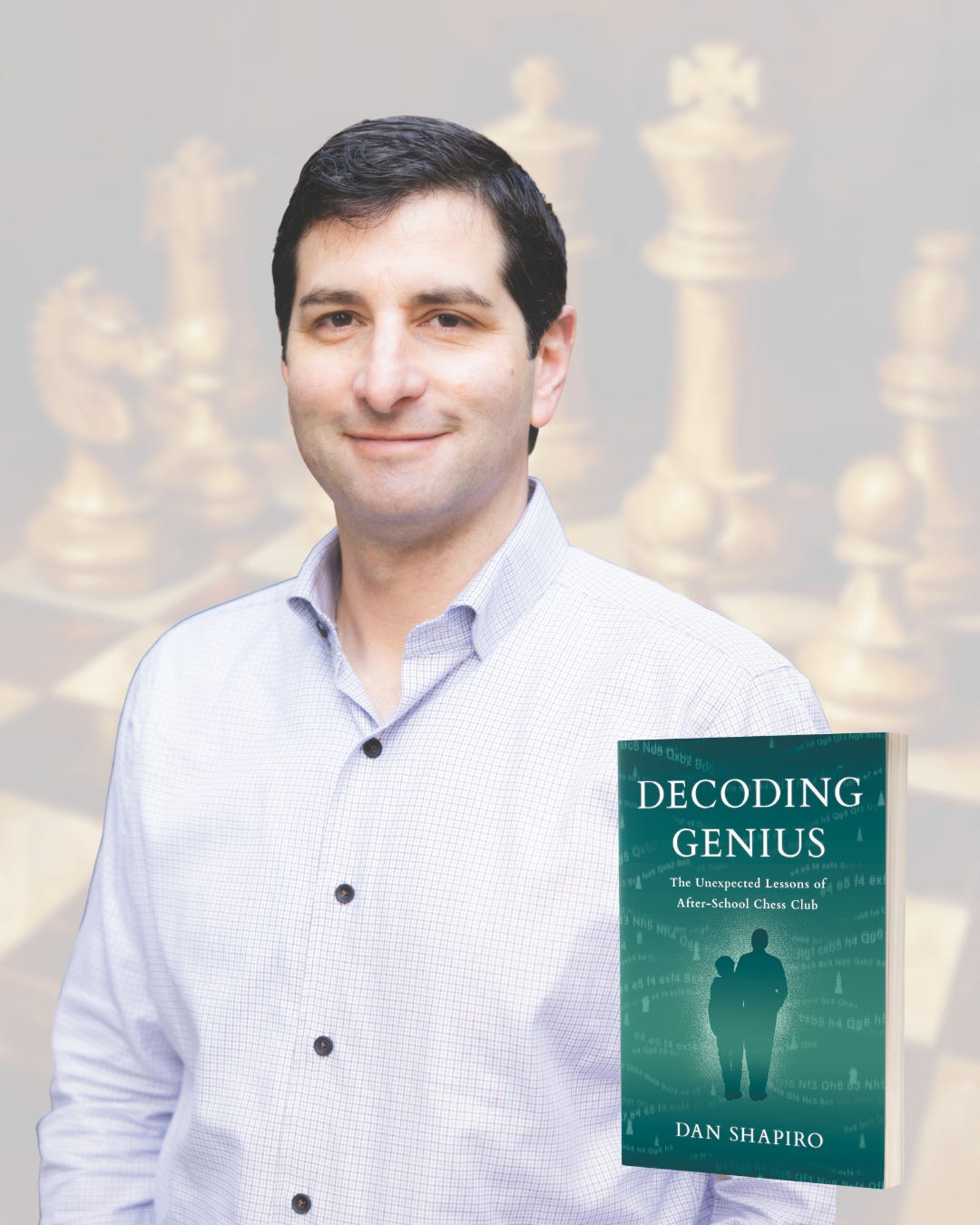
By Dan Shapiro
When my son started playing chess, I thought he was learning a game. Only later did I realize he was also learning character.
Like any parent, I wanted my children to find activities to help them grow into capable, confident, thoughtful people. Sports can do that; or music; or art. But some children need a different kind of arena, where curiosity, memory, independence, and analytical thinking are not just tolerated, but valued.
For my son Harry, it was chess.
During COVID, my wife and I began noticing Harry struggling. He had trouble focusing. He could become emotionally stuck. Schoolwork was difficult. Later testing helped us understand that he was twice exceptional, meaning he was both highly capable and facing real learning, social, and emotional challenges.
We found support from teachers, therapists, doctors, and coaches. But one of the most surprising tools for his growth was not a formal intervention at all. It was chess.
Chess gave Harry a place to develop skills that extend far beyond the board: patience, focus, resilience, confidence, decision-making and, perhaps most important, thinking before acting. These are not just academic skills. They are character skills, the building blocks of ethical behavior.
Ethics often begins in the tiny space between impulse and action. A child wants to grab a toy, shout an insult, quit the game, blame someone else, or rush into a decision. Character emerges when that child learns to pause, consider, choose, and take responsibility for the result.
Chess gives kids repeated practice in that pause.
Every move asks a question: What happens next? What am I risking? What am I leaving exposed? What is my opponent likely to do? Am I acting because this is wise, or because I am impatient?
The habit of questioning before acting is perhaps the most valuable discipline chess can teach a child.
Patience
The first character skill chess builds is patience. Many young players want to move quickly. They see a piece they can capture and take it. They see a threat and react immediately. They want action, progress, drama. But the chess player quickly learns that the obvious move is not always the best move. Don't act impulsively: wait, develop, protect, and prepare.
That lesson alone will serve children well to the end of their days. Patience is not just the ability to sit quietly. It is the ability to resist the first impulse long enough to make a better choice. A child who learns to pause before moving a chess piece is practicing a skill that also applies before sending a text, responding to a classmate, reacting to criticism, or giving up on something hard.
Focus
Chess also teaches focus. We often tell kids to pay attention, but we do not always give them good ways to practice it. Chess demands attention naturally. If a player drifts mentally, even for a moment, the board changes. A threat appears. A piece is lost. An opportunity disappears.
For Harry, chess became one of the few activities that could fully hold his attention. Because he cared about the game, focus did not feel like a punishment. It felt like engagement. That distinction matters. Kids build discipline when they invest themselves in the challenge before them.
Resilience
Then there is resilience. Chess is humbling. Every player loses. Sometimes the loss is slow and painful. Sometimes it happens because of one careless move. Sometimes a child believes they are winning, only to discover they missed something important three moves earlier.
That can be frustrating. It can also be incredibly useful.
In chess, a loss is not the end of the story. It is information. A child can look back at the game and ask: Where did things turn? What did I miss? What could I try next time?
That kind of reflection is essential to character. Ethical growth requires the ability to admit mistakes without collapsing under shame. It requires responsibility without hopelessness. Chess gives kids a safe place to practice losing, learning, and returning to the board.
Confidence
Confidence grows from that process too. Not the inflated confidence that comes from being told you are wonderful no matter what, but the sturdier confidence that arises from recognizing your own growth. A child learns a tactic. Solves a puzzle. Remembers an opening. Spots a checkmate. Plays someone stronger and lasts longer than before.
Those small wins build a sense of independence. The child begins to understand: My effort matters. My decisions matter. I can improve.
Children who feel powerless avoid challenge. They assume success belongs to other people. Chess can help reverse that. It gives them proof that effort, attention, and practice make them strong.
Decision-making
Most of all, chess teaches decision-making. Every move has consequences: Gain something now and pay for it later. Protect one piece while exposing another. Make an emotional move and suffer the fallout.
In life, children constantly make decisions, often before they have the maturity to understand their full impact. Whom should I trust? How should I respond? Should I keep trying or give up? Should I follow the crowd or think for myself?
Chess does not answer those questions for them; it strengthens the mental muscles they need to approach them. It teaches children to consider consequences, accept responsibility, and learn from experience.
Every child need not become a grandmaster. We don’t expect every boy who studies violin to become Itzhak Perlman or every girl on the soccer field to become Mia Hamm. We appreciate that the activity itself teaches discipline, teamwork, confidence, and perseverance.
Chess has every bit as much to offer.
It has the added advantage that parents can share the experience with their children, even they’re new to the game themselves. You can start small, learn the basic rules together with your child, try beginner puzzles online, watch simple instructional videos, look for a local chess club or library group.
The key is to keep the pressure low. Let chess be a game first. Let your child discover the challenge. The deeper lessons will come with time.
Parents can also use chess as a window into how their child handles frustration, mistakes, competition, and decision-making. After a casual game, instead of asking “Did you win?” try asking:
“What did you notice?”
“Was there a move you wish you could take back?”
“What would you try differently next time?”
Those questions help children pay attention to their own thinking. They encourage reflection instead of simple judgment.
As I watched Harry grow through chess, I began to see the game differently. It was not just about kings, queens, bishops, and pawns. It was about learning how to think under pressure, how to recover from mistakes, how to slow down, how to prepare, and how to trust your own mind.
Those are chess skills. They are also life skills.
Don’t we want our children to become thoughtful, resilient, ethical adults? Providing them the opportunity to develop those skills early on will ensure they have access to them later, when the stakes are high.
Dan Shapiro is the author of “Decoding Genius: The Unexpected Lessons of After-School Chess Club”